Risky Tuesday #16 · Floating screens · 17 November 2026 Every Tuesday, we take one risk event from somewhere in the world and classify it according to the Five Quadrants methodology. Postcard from Hefei, Part 2: Minority Report Is Here Quadrant 3
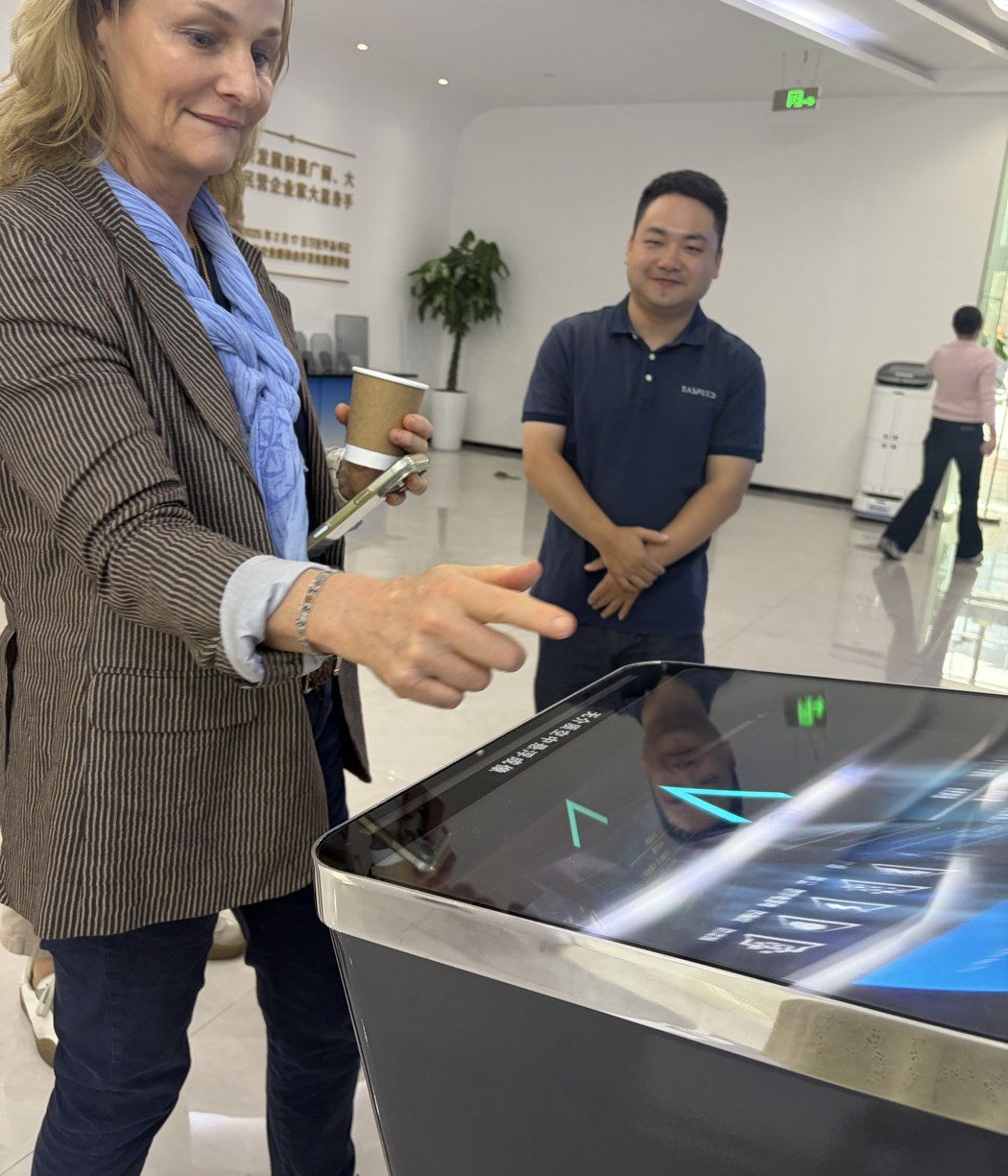
Dear Reader, In Minority Report, three psychics called precogs float in a pool and dream of murders before they happen. Tom Cruise, the Precrime chief, pulls on gloves with lights on the fingertips and sorts through their visions on a glass screen. Spielberg set the film in 2054. In Hefei, Claudia did the same thing in a company lobby, holding a coffee. No gloves. The kiosk at Easpeed (东超科技) looks like a normal touchscreen tilted at waist height. The picture floats a few centimetres above the glass, and you tap the air. Nothing under your finger, and the screen still answers.
Figure 1: Claudia pressing a button that isn’t there, at Easpeed’s showroom in Hefei. It feels like magic the first time. The risk shows up later. New technology often doesn’t quite work yet, and the people who buy it first end up as paying beta-testers. Most of us own one: the gadget that sat in a drawer six months later. So how do you tell, early, whether a new technology will find a use that pays?
Hollywood Got There First The film’s screen was designed by John Underkoffler of the MIT Media Lab, who later tried to sell a real one through his company, Oblong. It never reached the mass market. Hollywood rumour has it that Cruise kept needing breaks, because holding your arms up is tiring. Designers call it gorilla arm. Easpeed’s version is simpler. A flat lens floats the picture in mid-air, an infrared sensor watches your finger, and you point down, not up.
Too Early Is the Same as Wrong Bill Gross, founder of the start-up studio Idealab, compared 100 Idealab companies with 100 others. Timing explained 42% of the difference between winners and losers, more than the team, the idea or the money. His own lesson was Z.com, an online video company that closed in 2003. In early 2000 only about one American adult in a hundred had broadband at home. Soon after, YouTube launched with no business model at all, just as broadband was racing towards half of US homes.
The Paying Beta-Testers Google sold Glass in 2013 for $1,500 and called its buyers Explorers, a polite word for testers. Sales to them stopped in January 2015. Humane’s AI Pin went further. Buyers paid up to $699 plus a monthly fee. In February 2025 HP bought its software and patents for $116 million, and the pins stopped working. AT&T launched its Picturephone in 1970 at about $160 a month, and it peaked at a few hundred units. A video phone is useless until the person you’re calling has one too.
Hefei Backs It Early, Again Easpeed started in August 2016 with two University of Science and Technology of China students, Han Dongcheng and his classmate Fan Chao. They made their starting money taking graduation photos with a drone bought with scholarship money. The first big cheque, ¥8 million in January 2018, came from the city’s high-tech zone. State funds from Hefei and other cities followed, and a 2024 report put its value at close to ¥3 billion. In Hefei, the first paying beta-tester is the city itself. Its money went in before the company had much to sell.
Figure 2: Outside Easpeed’s building in Hefei.
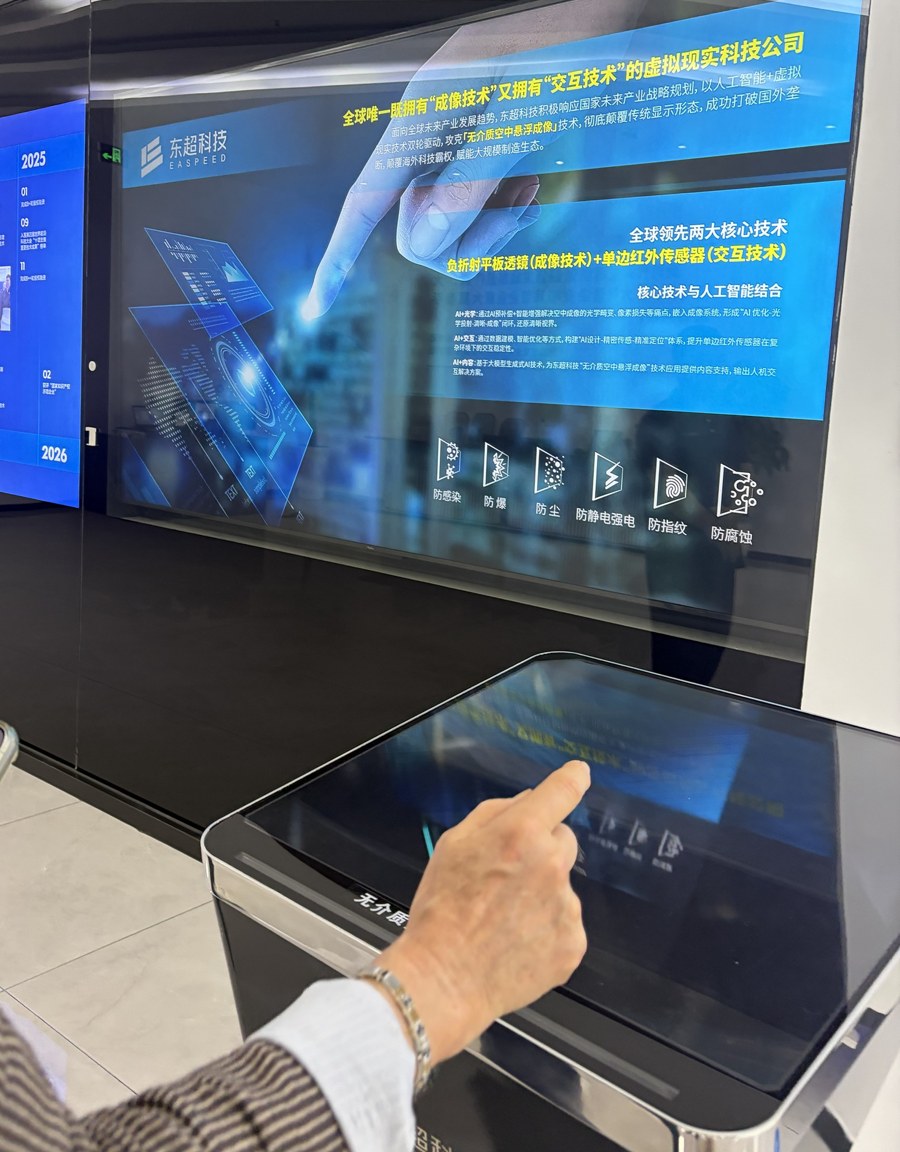
The Majority Report Covid gave Easpeed its big moment. In early 2020 nobody wanted to touch a lift button, and its floating buttons went into Hefei lifts at about ¥15,000 a panel. The company says hundreds of hospitals now use its kiosks. The showroom wall says Easpeed is "the world’s only" company with both the floating picture and the touch sensor. The future on that wall has one version.
Figure 3: The showroom wall, with "The world’s only" at the top. In the film, Precrime looks perfect for the same reason. When the precogs disagree, the odd one out, the minority report, is quietly deleted.
Finding the Minority Report Then the precogs predict that Cruise himself will commit a murder. To prove his innocence he kidnaps Agatha, the precog he hopes is holding the vision the system threw away. There isn’t one. Easpeed’s Agatha is in Japan. Asukanet has sold floating-image plates since at least 2017, including a trial at 7-Eleven checkouts in Tokyo. In March, with sales down by half, it dropped plans to make its own glass plates and gave Yesar, its partner in China, a ten-year licence to make the plastic ones. Even the "world’s only" sensor has a footnote: Easpeed’s 2020 lift buttons used infrared sensors from a Swedish firm, Neonode. That is the vision that didn’t fit. Covid made people afraid of buttons, and the fear has faded. Now the floating screen has to beat a cheaper ordinary touchscreen on its own merits.
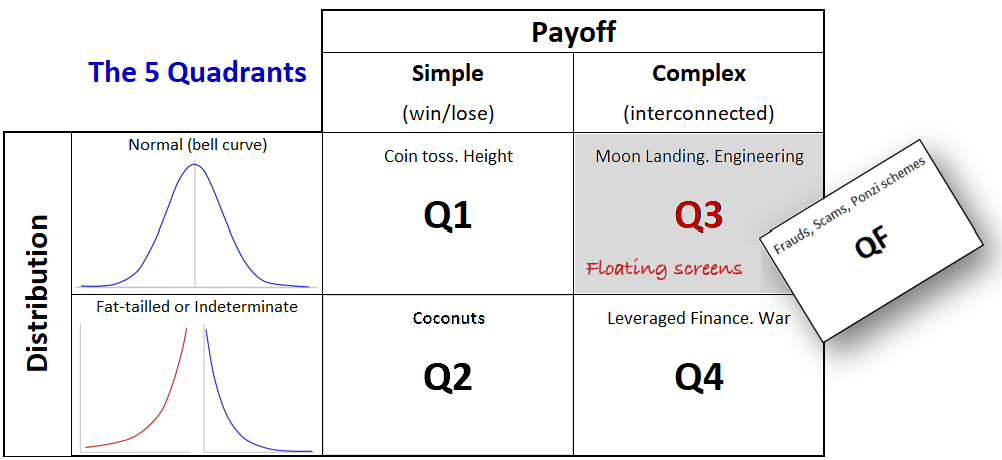
What Risk Quadrant Does a Floating Screen Inhabit? Quadrant 3. The physics works. Claudia poked it. The risk sits in everything around the lens. Each new market, from lifts to hospitals, is a new engineering job before anyone pays. So, back to the question. Does the need outlast the crisis? Is everything around it ready, the way broadband had to be for YouTube? Does it beat the cheap option? For Easpeed, hospitals answer the first. Hefei’s money is buying time for the other two.
Figure 4: The 5 Quadrants. A floating screen sits in Quadrant 3. Precrime fell because the man who built it had buried the vision of a murder he committed himself. The technology was fine. When a showroom shows you only one future, ask to see the other one.
Now I Need You Would you trust a button made of light? And tell us about the gadget you bought too early. What did it teach you? Then place your bet. In October, Tesla’s Roadster prototype launched off a ramp in Texas on bursts of compressed air. The FAA says it isn’t an aircraft, and Elon Musk says production starts in 2028. Will you be able to buy a flying Roadster by the end of 2028? We’ll keep score.
Joanna Reijgersberg-Siew, David Munro & Claudia Zeisberger
|