Risky Tuesday #14 · Fusion · 3 November 2026 Every Tuesday, we take one risk event from somewhere in the world and classify it according to the Five Quadrants methodology. Postcard from Hefei: Chasing the Sun Quadrant 3
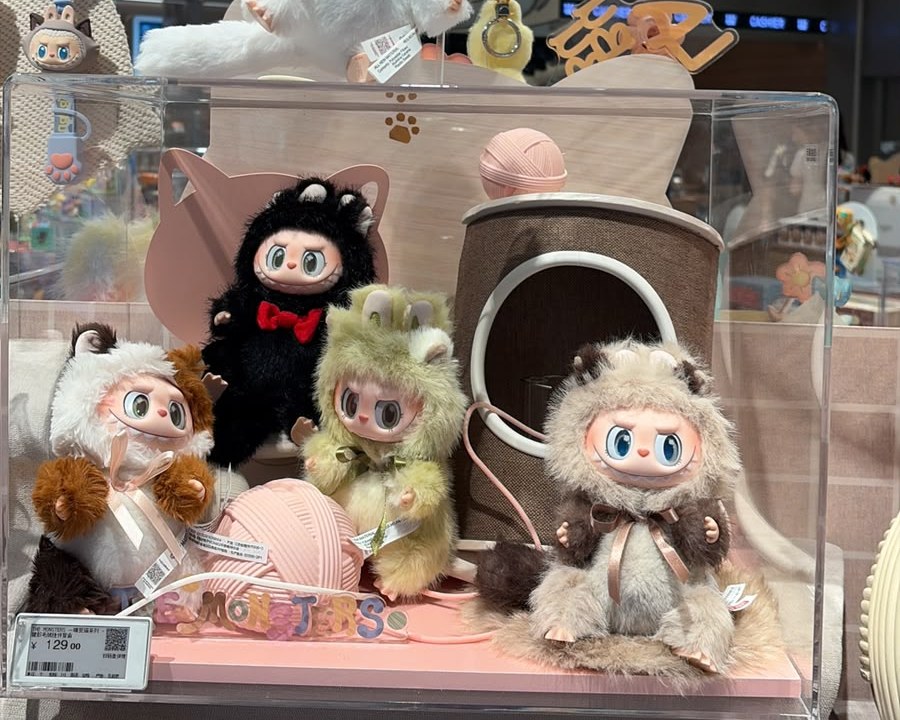
Dear Reader, Our day in Hefei started at Pop Mart. Outside, a giant Labubu waves from a cloud. Inside, his little cousins sit in a glass case at ¥129 each. Labubu had been around since 2015 without much fuss, until Lisa from Blackpink posted hers on Instagram in April 2024. A year later, Pop Mart had to halt in-store sales in the UK after fights broke out in the queues. Last month it said third-quarter sales had fallen by almost half. Hype money arrives fast and leaves faster. We had come to Hefei to see the patient kind.
Figure 1: Pop Mart, Hefei. The crowd has started to move on.
A City That Invests Like a Venture Fund Hefei is not on most people’s map. It should be. The capital of Anhui province passed 10 million people in 2024 and builds roughly one in every twelve electric cars made in China. Its city government picks companies and backs them with public money. It rescued electric car maker NIO in 2020, when the company was close to running out of cash, and sold most of its stake within a year for up to five times its investment. It funded memory-chip maker CXMT through years of losses. CXMT listed in Shanghai in July in Asia’s largest IPO of the year and, on its first day, became China’s most valuable listed company. Fusion is the city’s next bet.
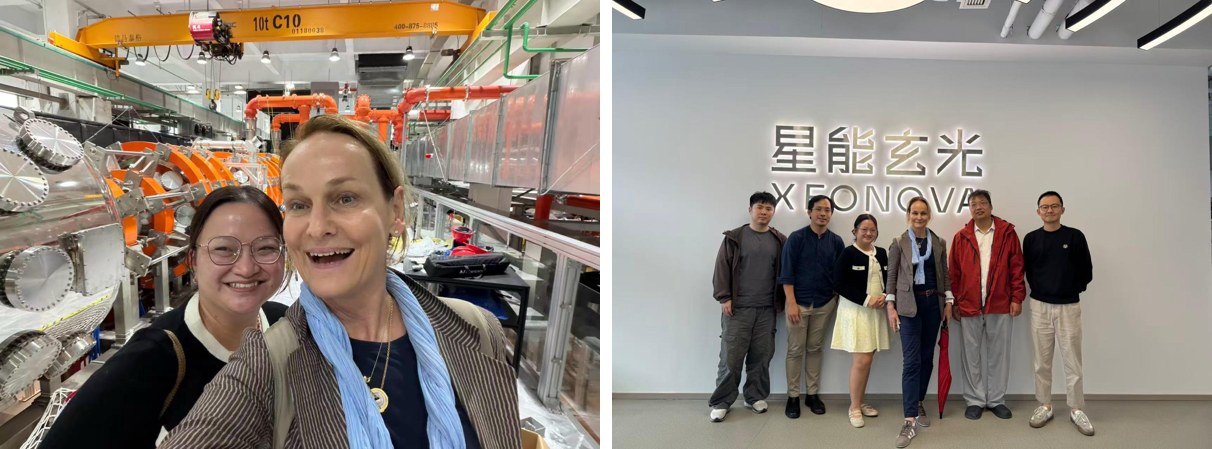
A Fusion Start-up in a Hurry Xeonova (星能玄光) was founded in March 2024 by Sun Xuan, a professor at the University of Science and Technology of China who has spent more than 20 years on fusion, in labs and companies in China and the US. The parts for its first machine arrived in December 2024. It fired up in February 2025. In a field where projects are measured in decades, that is a sprint. Ant Group led its funding round in late 2025.
Figure 2: Joanna and Claudia in front of Xeonova’s fusion machine (left), and with the Xeonova team (right). Across town, a very different machine is going up. BEST is a giant doughnut-shaped reactor, due to be finished by the end of 2027, with the aim of showing that fusion can make electricity by around 2030. One of the company’s shareholders is NIO. The city’s car bet is now funding its fusion bet.
Why the Money Is Coming Now AI. Data centres used 415 terawatt-hours of electricity in 2024. The International Energy Agency expects around 945 by 2030. Grids cannot keep up, and the tech giants are shopping for anything that might. Microsoft has signed up to buy fusion power from Helion, a US start-up, from 2028. The two sides fund the race differently. In China most of the money comes from the state, which set up its own fusion company in Shanghai in 2025. In the US and Europe most of it comes from private investors, with governments investing alongside them through public-private partnerships. US start-ups alone raised a record US$4.5 billion in the year to July. By one estimate, China’s government has invested about three times as much in fusion since 2023 as the US government has. Western fusion runs mostly on private money. Chinese fusion runs mostly on the state.
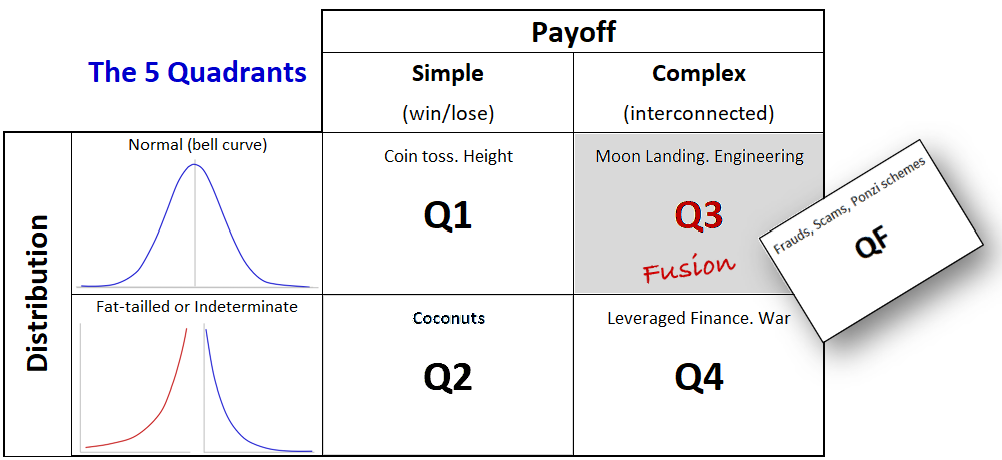
What Risk Quadrant Does Fusion Inhabit? Fusion belongs in Quadrant 3, alongside the moon landing. The physics is well understood. The difficulty is engineering: magnets, plasma, materials and fuel supply all have to work together, at the same time, at temperatures hotter than the sun. A small fault in one part can stop the whole machine. Fusion has been 30 years away for about 70 years. That is the obvious risk. Even the optimists talk in decades. Type One Energy, a US start-up, hopes to have its first power plant running in the mid- to late 2030s, and start-ups are paid to be hopeful. Hefei’s own province plans commercial fusion plants from around 2040. BEST is only meant to prove the electricity can be made. The less obvious risk is picking the design. Big doughnuts like BEST are the proven path, slow and expensive. Smaller machines like Xeonova’s and Helion’s could be faster and cheaper, if the engineering holds. Nobody knows which will win. Hefei’s answer is to back both, in the same city. It is the approach that worked with cars and chips: bet on several horses, and keep feeding them through the losses.
Figure 3: The 5 Quadrants. Fusion sits in Quadrant 3, where the payoff depends on many interconnected parts. Labubu is fast money. Fans pile in, sell on when the hype fades, and walk away. Fusion money can’t do that. Western investors come in as venture capital, buying shares in companies that won’t make a profit for years, and they can’t easily cash out. A few are trying to sell their stakes to other investors. Most are stuck. So the money does stay for a decade, because it has no choice. The real risk is the next round. A fusion start-up only keeps doing research for as long as it can keep raising money. In Hefei, the state can keep writing the cheques. In the West, someone has to keep believing through a fifth, sixth and seventh funding round.
Now I Need You Would you put money into fusion today? If so, would you back the big doughnut or the small start-up? And if you work in energy or AI infrastructure, tell us when you think the first fusion electron reaches a data centre.
Joanna Reijgersberg-Siew & David Munro
|