Risky Tuesday #4 · 25 August 2026 Every Tuesday, we take one risk event from somewhere in the world and classify it according to the Five Quadrants methodology. This is the fourth. Greensill and the Art of Risk Creep History Flashback – with Factoring & a Greensill Update
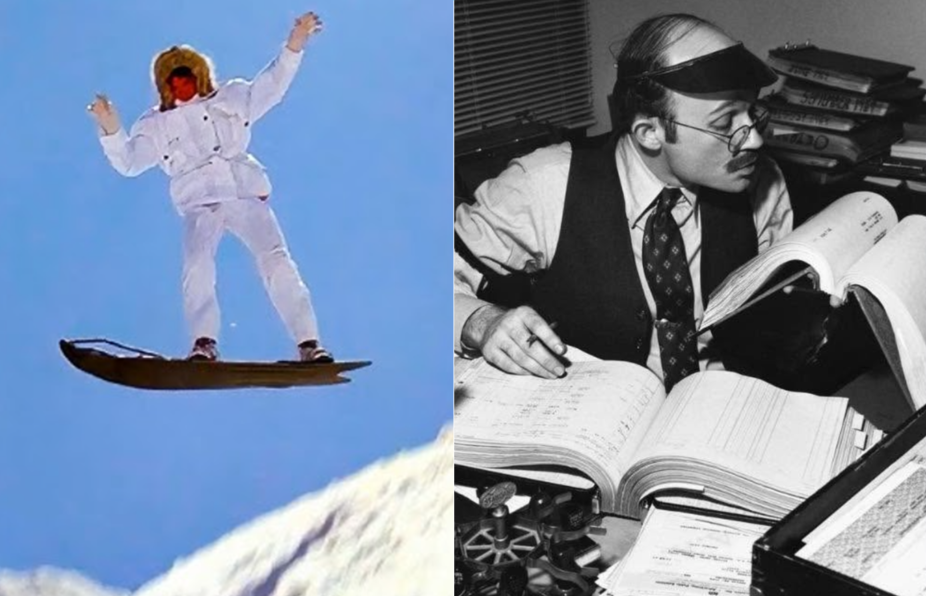
James Bond films start with a 5- to 10-minute, pre-title, action-packed adrenaline jolt (skis, planes, motorcycles, rooftops) and then descend into ennui, bad puns, and evil one-eyed masterminds. The opening promises danger, but the core resorts to quips, gadgets, and a woman whose only function is to be a seductress. Lex Greensill reversed the order. His boring yet reliable reverse-factoring (Supply Chain Finance, or SCF) company started with a yawn and went out with a bang. His business was lending small amounts, short-term, frequently, and with a widely diversified customer base. Greensill enabled immediate payments to suppliers while allowing customers to pay later. He took a small fee for the time value of money, his cost of capital, and for facilitating smooth cash flows. One new trade finance loan or client would not impact the average return per deal or the long-term expected outcome. The individual risks were simple and uncorrelated to the macro business environment. The low and steady returns aligned with the level of risk. I would imagine Lex Greensill slept well at night. Supply chain finance is a classic Quadrant 1 risk.
Figure 1: James Bond (Roger Moore) escaping the evildoers in a screenshot from A View to a Kill (1985). A stereotypical accountant from the Facebook page “The Modern Age to the Atomic Era: History, Art & Culture from 1600–1960”. The plot then thickened. A cast of complex, famous, and political characters were shuffled with imaginative financial structures, global real estate, and expensive toys. Greensill had four private jets (Sanjeev Gupta, the “Man of Steel,” and Greensill had matching paint jobs on two jets), and between the two of them were helicopters, a Belgravia Townhouse, and a 46,000-hectare Scottish estate. I’m sure one of the cast wore an eye patch. It’s difficult to determine who best resembles Bond in this twist; perhaps a forensic auditor. How did the business unravel? Sanjeev Gupta played a leading role.
When One Customer Becomes the Business He began as a commodities trader, selling chemical products to Nigerians from his Cambridge dorm room in the 1990s, and starting around 2015 rapidly accumulated distressed steel plants. By 2019 GFG Alliance had bought €740 million of ArcelorMittal assets, adding seven steelworks and 14,000 employees. The wider group eventually counted more than 35,000 employees and $20 billion of revenues. But beneath this empire was a complicated collection of hundreds of related entities that did not publish consolidated accounts. Greensill became a crucial source of funding for it. While not central to the story, a delightful irony is that Gupta’s primary UK operations rented space in “Enron House” near Buckingham Palace. Enron was famously connected to over 3,000 subsidiaries, partnerships and shell corporations, and 22 of their executives were convicted for crimes related to the Enron collapse.
Future Receivables Traditional reverse-factoring financed an invoice for something that had already happened; after the goods or services had been received, examined, and approved by the client, the bank/financier paid the supplier. Greensill increasingly financed sales that had not yet happened. They were turning income that a company “expected” to receive months or years in the future into assets. Mining company Bluestone Resources borrowed $850 million from Greensill in total: about $70 million through traditional supply chain financing, and roughly $780 million against “future receivables and projected sales” from prospective, non-existent customers. An invoice became the prediction of a sale, whereas in the past, it was evidence of one.
The Spaghetti Arrives SoftBank had invested $1.5 billion in Greensill, while Greensill financed several SoftBank portfolio companies, including Katerra, Oyo, and Fair. Credit Suisse then packaged Greensill’s loans into investment funds and sold them to outside investors. So far, merely complicated. Then SoftBank itself invested more than $500 million into those same Credit Suisse funds, which in turn financed other SoftBank companies through Greensill. Money was now travelling in circles: SoftBank to Greensill, Greensill to its portfolio companies, their debts to the Credit Suisse funds, and SoftBank back into those funds. Other investors came along for the ride. The once-simple business of paying suppliers early was beginning to resemble the Paris Metro map.
The Dress Rehearsal There had already been a warning. Greensill introduced GAM fund manager Tim Haywood to Gupta, who then bought large amounts of Greensill-originated debt, much of it tied to Gupta’s GFG companies. Concerns grew over the illiquidity of the assets, the concentration of exposure, and Haywood’s close relationship with both men. When Haywood was suspended in 2018, investors ran for the exits, and GAM was forced into a painful unwind. Gupta eventually repaid about £600 million, reportedly using proceeds from a new Greensill facility. The first alarm had sounded, but no one really listened.
Pull One Thread While standard supply chain finance is funded by bank balance sheets or diverse capital markets, Greensill relied heavily on securitization that was enabled by a single insurer, Tokio Marine. When the insurer refused to renew coverage due to the high risk of future receivables and concentration issues, Credit Suisse (which had launched funds containing Greensill’s loan assets) froze the funds and triggered a liquidity crisis. Greensill wasn’t able to meet its obligations without that specific insurance wrapper. Without insurance, the financial machinery was stuck. Greensill couldn’t offload existing loans, so it couldn’t write new ones. Insurance was supposed to reduce the risk, but dependence on it became another risk. The original 5 Quadrants paper suggested insurance as one solution to mitigate Quadrant 4 risks, but it also said, “Make sure the insurer can pay.” That was a reference to AIG in 2008. We could now add, “Make sure the assets insured actually exist.” “Mr. Greensill, are you a fraudster?”
Q1 → Q2 → Q4 → QF? At what point does reckless Q4 behavior become QF, the most entertaining quadrant and the domain of fraud and criminal intent? That distinction will ultimately depend on documents, forensic auditors, regulators, and courts. Bad judgement is not fraud. Neither are excessive concentration, weak underwriting, related-party transactions, or an unhealthy penchant for financial complexity. But when financing is extended against phantom sales, to customers who may not exist, and money begins travelling in circles among related parties, the boundary gets hazy. The consequences are playing out. GFG Alliance has been pushed into administration and liquidation in several jurisdictions, German prosecutors have pursued former Greensill Bank executives; the UK Serious Fraud Office continues to investigate GFG’s financing arrangements with Greensill; and in June 2026 Lex Greensill was banned from serving as a UK company director for nine years. He has not been criminally convicted. Perhaps the more useful lesson lies earlier in the story. Greensill did not leap from Q1 to Q4/QF. It wandered there one decision at a time: a little more customer concentration, a jet, a little more leverage, another jet, an invoice for anticipated sales, a third jet, a related company, a fourth jet, another layer of securitization, and one indispensable insurer. Other than the jets, none of these steps, viewed alone, would look fatal. Together, they turned a boring financial business into something nobody fully understood.
The Quadrant One Checklist • Has client concentration crept in? • Has a boring business become sexy and complicated? • Is the return still commensurate with the risk? • Are related-party transactions proliferating? • Does the business depend on one insurer, lender, or other indispensable counterparty? • Do the main characters have private jets and glass houses? • Are Credit Suisse, SoftBank, or politicians involved? CS, admittedly, has now been solved.
Now I need you. This project only works if we have a conversation. Have you ever worked in Supply Chain Finance and noticed a risk-seeking pivot in your core business? Do you buy commodities (or anything really) and reverse-factor invoices to allow earlier payment to your supplier? Have you ever had a role in the production of a James Bond film, ideally as an actor in an evildoer role? If you own jets, can you enlighten us as to why three isn’t enough? Let us know your industry opinion and especially what you would disagree with in this Risky Tuesday newsletter. We’ll collect the best and share them in a future issue (or on the website risk repository), with credit. Next Tuesday, a different risk and a different quadrant. Forward this to someone who would argue with it. Dave
|