 Risky Tuesday #2 · 11 August 2026 Every Tuesday, we take one risk event from somewhere in the world and classify it according to the Five Quadrants methodology. This is the second. Situational Awareness is Not Normal
Simple, normally distributed risks reside in Quadrant 1. No single event or additional data point will significantly change the average. Think coin tosses, the average height of 100 eight-year-olds, or subway commute time in Hong Kong, Singapore, or Tokyo. No surprises; no drama. And usually, no need for a risk manager. A single publicly listed stock, on the other hand, lives in Quadrant 2. Stocks can go to zero (bad management, dying business, or fraud) or, seemingly, to infinity. SanDisk soared 2,600% in a year, AXT rose 4,000% from its low, and SK Hynix recently jumped 1,100% from its low. Bed Bath & Beyond filed for Chapter 11, as did iconic Tupperware, and 23andMe (I’m 0.6% Italian—thanks Emperor Claudius) was suspended and then delisted. A Picture Is Worth … 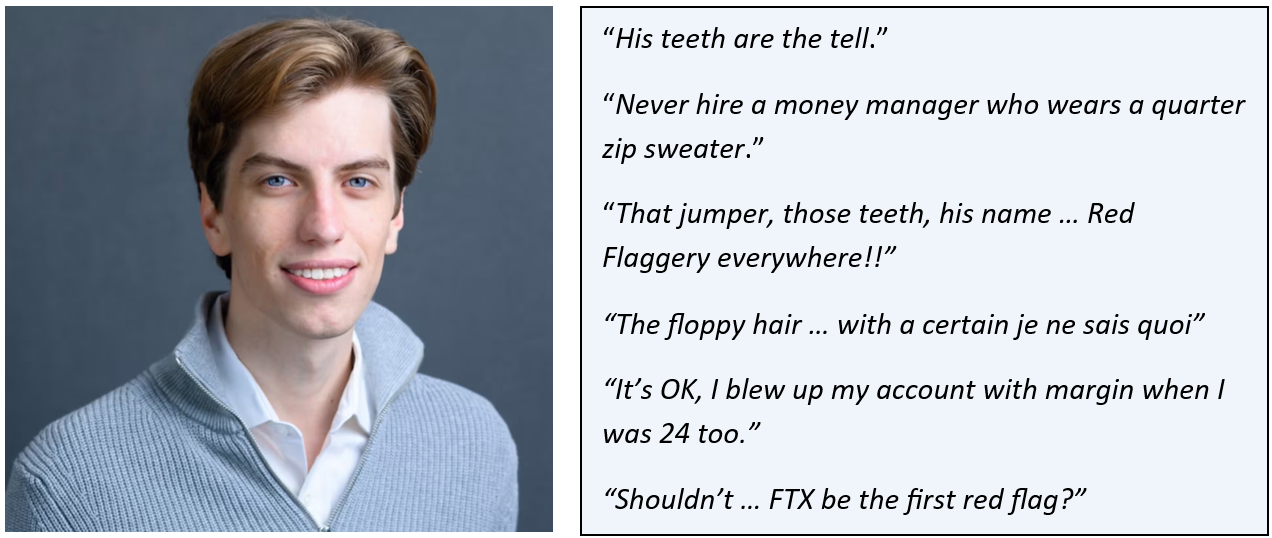 Figure 1: Leopold Aschenbrenner image from the Financial Times article “How Leopold Aschenbrenner, the ‘golden child’ of the AI trade, was laid low.” Plus a few gratuitous ad hominem criticisms (unattributed) from the comments section. 31 Jul 2026. Much of the reflex criticism of Aschenbrenner and his rapid 67% July wipeout focuses on his youth, trading inexperience, hubris, a stint at FTX’s Future Fund (the philanthropic arm of SBF’s FTX foundation), and a firing from OpenAI. Naysayers lecture that “wunderkind” smarts rarely translate into trading acumen. Unfortunately the smile, gilet, teeth, and floppy hair don’t help. But those are all distractions. The real culprit, if one must be assigned, is the investor.
Situational Aggression Leopold Aschenbrenner’s fund, Situational Awareness (the foresightful irony is superb), didn’t build a Q1 Gaussian, low-risk portfolio of equities. Instead, it invested in a couple of dozen stocks that were expected to benefit from the logarithmic growth of artificial intelligence. It was a concentrated, narrowly defined, and volatile investment thesis that he fully committed to. And then he levered it up. The 24-year-old Nostradamus of AI, as he was described in an FT article, played in Quadrant 2. The investment theme and portfolio composition were simple, but the tails were fat. One fat Q2 outcome can kill. What are the odds that his investors understood Q2 risk? 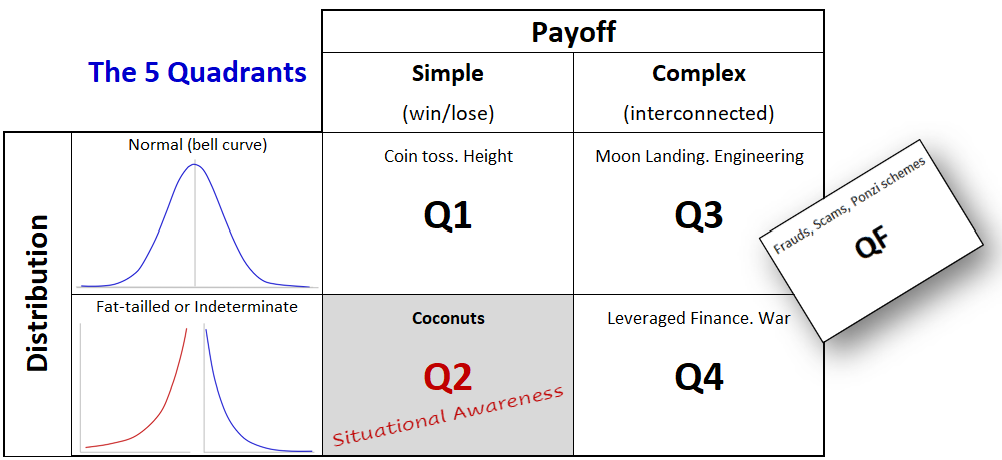 Figure 2: The hedge fund Situational Awareness sat in Quadrant 2 (simple payoff with a fat tail) according to the 5 Quadrants risk classification framework.
Orders of Magnitude Aschenbrenner’s writing displayed that he thinks logarithmically, rather than in percent changes. His 165-page “Situational Awareness” paper frames growth in Orders of Magnitude, or OOMs, not in time. 10x is one order of magnitude. He wrote, “Over the past year, the talk of the town has shifted from $10 billion compute clusters to $100 billion clusters to trillion dollar clusters. Every six months, another zero is added to boardroom plans.” He unabashedly bought into the notion of rapid logarithmic AI physical and digital infrastructure expansion and invested his fund’s capital, plus borrowed money, based on that theme.
No Limits The fund’s offering documents did not place any limits on the stocks it could purchase or the amount of leverage it could employ. According to the fund prospectus and investor documents reviewed by The New York Times, plus regulatory SEC filings, Situational Awareness (SA) explicitly granted itself maximum flexibility. No upper leverage ceiling was specified by any internal fund mandates. As Buzz Lightyear said, “to infinity [or zero] and beyond!” Those guardrails wouldn’t have mattered anyway.
How Right Was He? Markets confirmed Aschenbrenner’s thesis for over one and a half years. His fund, launched in September 2024 with $225 million in seed capital from four Silicon Valley heavyweights, gained over 1,000%, and AUM rose to an estimated $45 billion. After a long bull run and with upwards of 400% leverage through margin loans provided by prime brokers Goldman Sachs, JP Morgan Chase, and Bank of America, AI stocks turned in July 2026. The fund went into the month heavily long AI hardware and infrastructure names such as SK Hynix, Nebius, and CoreWeave, while simultaneously shorting legacy software companies such as Adobe. In July, the hardware names fell hard while the shorted software stocks unexpectedly rallied, so both sides of the book moved against him at once. Simultaneous margin calls from all three prime brokers forced a $16 billion distressed block sale to Citadel, who bought much of the book at a discount in a deal sealed by an early-morning phone call between Aschenbrenner and Ken Griffin.
Concentration, Liquidity, and Leverage (CLL) You can often get away with one of them, two if you’re lucky (for a short period), but never all three. The Situational Awareness portfolio was extremely concentrated in high-Beta AI infrastructure stocks. Think of Beta as a multiplier. A Beta of one means your portfolio rises and falls in line with the broader index. From my calculations, Situational Awareness had a Beta of four, excluding leverage. If the S&P rose or fell 10%, an unlevered SA portfolio could be expected to rise or fall by 40%. X for Concentration. The individual stocks that SA invested in were highly liquid, but the fund itself had the liquidity of a maximum security prison. Once in, an investor couldn’t leave for at least two years, and then only a portion could be redeemed each quarter. Very Hotel Californiaish. X for Liquidity. Leverage was somewhere between 200% and 400%. Mix that with the concentrated high-Beta portfolio and the inability to exit, and it was simply a matter of time before investors were educated about Quadrant 2 risk. X for Leverage. How do you manage a Quadrant 2 risk? The only possible risk management solutions are avoidance or mitigation. Avoidance means don’t invest. Mitigation means risking only a tiny portion of your investable capital. It could also involve buying put protection if the longs are easily identifiable and held for the long term. But that introduces a basis risk that could hurt if markets continue to soar. Since the fund was concentrated, levered, and illiquid, the only sane choice was avoidance.
Next Tuesday, a different risk and a different quadrant. Forward this to someone who would argue with it. Claudia and Dave
|