 Risky Tuesday #1 · 4 August 2026 Every Tuesday, we take one risk event from somewhere in the world and classify it according to the Five Quadrants methodology. This is the first. Forests as the Fuel
We spent June and July in Europe, so this summer’s fires were never far from the news, or from us. The forest of Fontainebleau, across the street from INSEAD, hosts our morning walks; a sensory immersion among silver birch, European hornbeam, and chestnut trees. Three days after leaving INSEAD, the forest ignited (oddly, the primary arsonist was a firefighter, with a smoker—how French—suspected in a supporting role), the business school was evacuated, and sadly, over 2,000 hectares burned. Nicholas Ward, an INSEAD alum, tells the story of a previous evacuation in May of 1968, when tanks rolled past the INSEAD campus (exams were cancelled) on the way to Paris at the behest of Charles de Gaulle. The first evacuation was caused by firepower; the recent one was due to the power of fire. We escaped to the lakes of Northern Italy where more temperate climes prevailed with, theoretically, a reduced risk of pine and dry brush infernos, only to find Canadian De Havilland “super scooper” aircraft buzzing lakes Maggiore, Garda, and Orta, gulping six thousand liters of water (6 tonnes) per dip on the way to fighting the devastating fires of the Piedmont region. 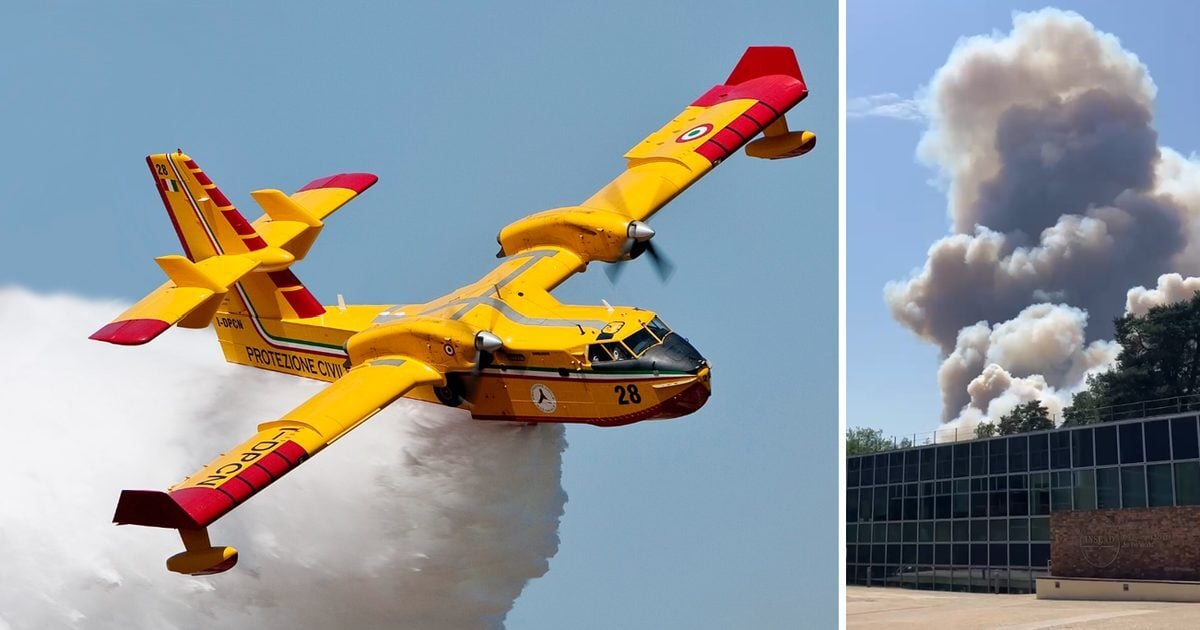 Figure 1: A de Havilland “super scooper” refilling over a lake in Northern Italy and the forest around the INSEAD campus in Fontainebleau, July 2026. (Photo credits: Wiki Commons, Maarten Visser CC BY-SA 2.0, and an anonymous INSEADer). Climate activists want emissions cut, and agronomists call for better land management with more tree diversity and renewed marshlands, while deniers say the fires are no worse than those that fired up the 1980s. Who is correct? We took a look at the data. France, which tends to have the earliest fire season start among the EU-5 (Italy, Spain, Portugal, and Greece), has already had more hectares burned by 29 July than in any other complete year since 1980. The figure is 91,209 hectares, against a previous full-year record of 75,566 in 1989. France’s burn season is traditionally 62% complete by end-July, so a reasonable full-year estimate is 146k hectares, almost twice the previous record. Fires have consumed 220k Spanish hectares (the most susceptible European country) and 71k Italian hectares. At this point in the season, Spanish fires are usually only 40% complete, and Italian fires (a late starter) are just 35% of the way through a full season. It’s by no means over. 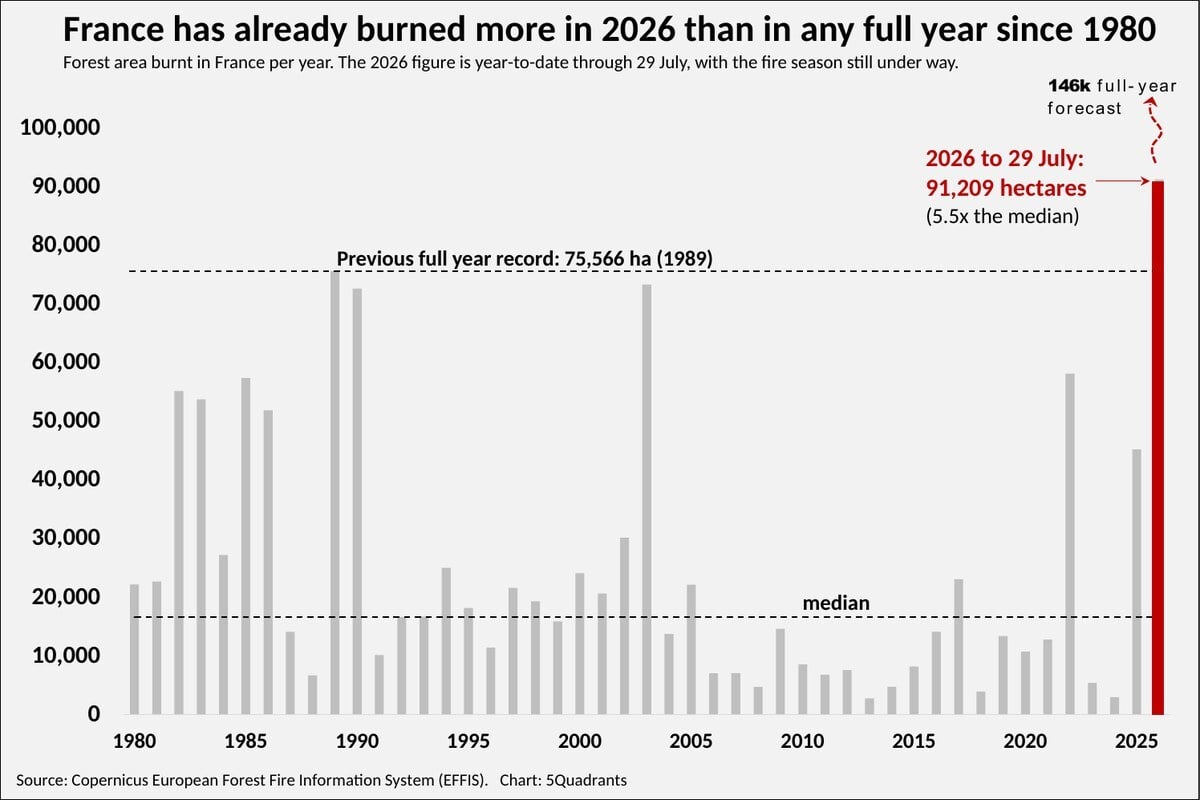 Figure 2: French hectares burned to date versus prior full-year records from 1980.
How do you manage a Quadrant 4 risk? Get out of it. In finance, this involves chopping the tails, buying crash puts, limiting the downside contractually, and reducing leverage. With forest fires, the solutions include prevention, mitigation, early detection, coordination, and recovery. And, increasingly, AI.
Prevention Keeps a fire isolated and simple instead of accelerating and interconnected. To cut the fuel load, manage dry brush and dead wood through controlled grazing and prescribed burns. Urbanization leads to fewer cows and sheep and abandoned fields. The leftover scraggy scrub and untended undergrowth act as dry kindling. It’s largely a demographic-led disaster. Zero fires is not the goal: prescribed burns are the 100 grams of prevention that prevent a kilo of damage. (ounces and pounds for the Americans). Break up the monoculture: mixed native species resist flames in a way that single-species pine plantations do not. Forests need broad-leafed oaks, alders, birch and willows that shelter beavers and otters. They need marshes that host amphibians, waterfowl, dragonflies, sedges and rushes. (This is an excellent LinkedIn post on forest management—or rather, how it went astray—by Louis Thompson, and Dr. Hermann Aubie’s comment on the post is equally informative). Rebuild firebreaks: wetlands, green corridors, and low-flammability (broadleaf) roadside planting. Catch fires early: open-source detection like the Fontainebleau forest system, with tower-mounted cameras spotting plumes up to 35 km away, alerting firefighters up to 45 minutes before eyewitnesses can. An AI solution awaits: AI-powered optical and thermal cameras and sound (crackling wood) detection with IoT gas, smoke, and sonar sensor networks, all connected to autonomous water-bombing drones. The Thunder Wasp, an autonomous drone with a 400 kg lifting capacity (15 to 20 of them equal one super-scooper), uses AI swarm algorithms to coordinate precision water drops on hotspots. They’ve been heavily tested in Canada’s Squamish Valley.
Mitigation Early warning is provided by EFFIS drought and heat monitoring. Cross-border fleets include rescEU crews, France- and Italy cooperation agreement via ALCOTRA, and shared water bombers. Community defense involves enforcing stricter building codes (fire-retardant ceilings in Swiss bars would be a start) and clearing vegetation around villages and mountain settlements.
Recovery Recovery effectiveness determines how fat the next tail will be. Stabilize the soil post-burn before the topsoil erodes. Let the land regenerate naturally rather than plant non-native species that burn hot and fast. None of this is exotic. We used to do much of it routinely but then stopped when rural land was abandoned and pine was planted for yield.
Next Tuesday, a different risk and a different quadrant. Forward this to someone who would argue with it. Claudia and Dave
|